
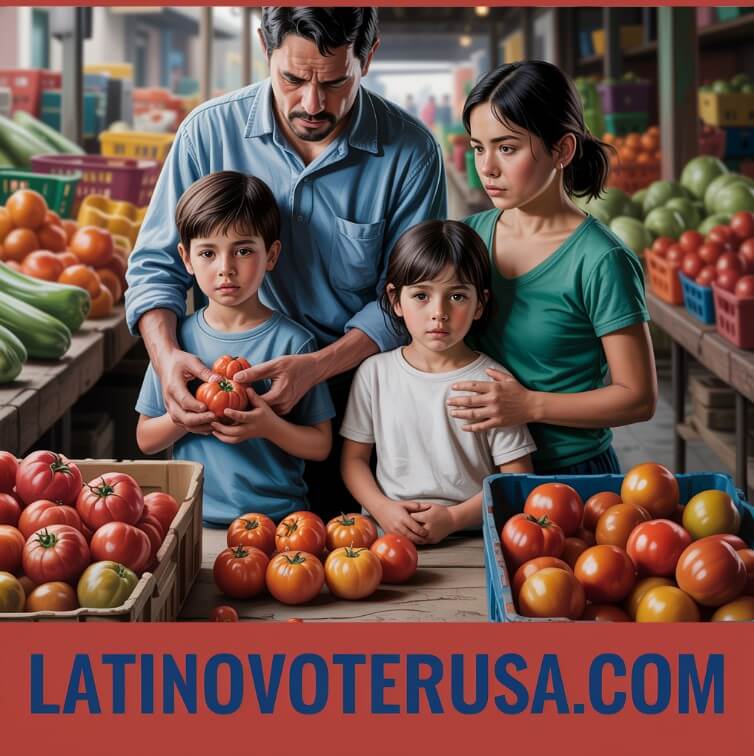
When Trade Wars Hit Your Home: How Tariffs Are Costing Latino Families
July 18, 2025
The administrations trade wars are costing our families.
You know that feeling when you're at the grocery store, and suddenly the same cart that used to cost $150 is now pushing $200? Or when your favorite coffee brand jumped $3 overnight? Well, there's a name for what's happening, and it's not just "corporate greed" (though that's part of it too).
We're looking at inflation that's climbed 2.7% in the past year – and here's the kicker: a big chunk of that increase is coming from tariffs. Yes, those trade policies that politicians love to debate are literally reaching into your wallet every time you shop.
Think of tariffs as a cover charge at the border. When companies import goods from other countries, they now have to pay what's essentially a tax – and guess who ends up paying for it? That's right, us.
The average tariff rate has shot up to 18.7% – the highest it's been since 1933. Some products are getting hit with tariffs as high as 30%. To put that in perspective, that's like adding a 30% tip to everything you buy, except this "tip" goes to the government, not your server.
Here's where it gets personal. Latino families, who already spend a higher percentage of their income on basic necessities, are feeling this squeeze more acutely. When household items and clothing prices jump because of tariffs, it's not just an inconvenience – it's a real budget crisis.
Take household furnishings, for example. Prices have jumped 1% in a single month – that might not sound like much, but when you're trying to furnish your first apartment or replace your kids' beds, that 1% adds up fast. And this isn't a one-time thing; it's happening month after month.
Here's what really gets me: analysts are predicting that our inflation-adjusted income could drop by 0.4% by 2028. That means even if you get a raise, you'll actually have less buying power than you do today. For families already stretching every dollar, that's not just a statistic – it's a crisis.
To make things worse the Federal Reserve might raise interest rates to combat inflation, which means higher costs for car loans, mortgages, and credit cards. So not only are you paying more for groceries, but you're also paying more to borrow money for that car you need to get to work.
Politicians love to talk about protecting American jobs with tariffs – and look, I get it. We want good jobs for our communities. But here's the thing they don't always mention: those "protective" tariffs are being paid for by working families like yours and mine.
It's like being told the neighborhood watch is going to protect you, but you have to pay for it every time you buy milk, diapers, or school supplies for your kids.
The truth is, we're caught in the middle of a trade policy that's supposed to help American workers but is making everyday life more expensive for American families. Latino families, who are already more likely to live paycheck to paycheck, are bearing a disproportionate burden.
This isn't just about economics – it's about our families' ability to get ahead, to save for our kids' education, to maybe take that vacation we've been planning, or to help our parents when they need it.
While policymakers debate the merits of trade protection, Latino families are making tough choices at the kitchen table. Do we buy the name-brand cereal the kids like, or do we stretch the budget with the generic version? Do we replace those worn-out work shoes now, or wait another month?
These aren't abstract policy discussions – they're real decisions that real families are making every day. And until our elected officials understand that their trade policies have real consequences for real people, we'll keep paying the price.
The question isn't whether tariffs protect some jobs – it's whether the cost of that protection is worth making everything else more expensive for the families who can least afford it.
What do you think? Are you feeling the pinch from rising prices? Let us know how inflation is affecting your family – because your voice matters in this conversation.
Stay informed, stay engaged, and remember: your vote is your voice in these policy decisions that affect your daily life.
Read Next:
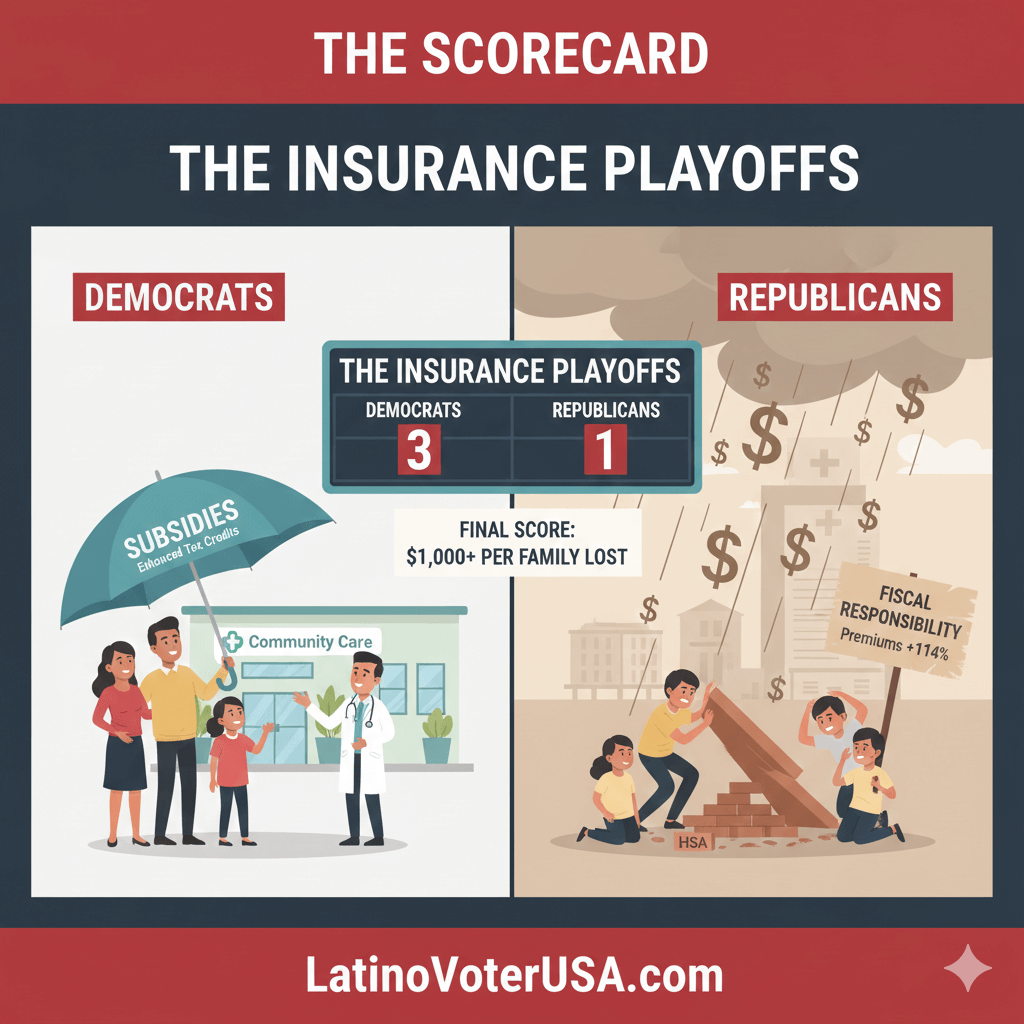
The Scorecard: The Health Insurance Playoffs!
You are not experiencing Deja vu! We are again facing a government shutdown, the main reason for it is the lack of a hea...

Opening the Opportunity Door for the Whole Family
What is the "Opportunity Door"? Imagine our Tía Sofia. She’s the heart of the neighborhood, the o...
Tamale Inflation is the Grinch of 2025
Tamale Inflation hit the kitchen before it ever hit a cable news chyron. Not in some abstract “consumer basket&rdq...