

Medicaid Cuts Impact on Latino Families
July 29, 2025
Medicaid cuts are heading straight for Latino families like a freight train in the night, and most of us don't even see the headlights yet. As we barrel toward 2025, the very safety net that millions of our families depend on is about to get pulled out from under us, and the politicians making these decisions seem to think we won't notice until it's too late.
Picture this: Maria, a single mother of three in Phoenix, works two part-time jobs but still can't afford health insurance through her employers. Her youngest son has asthma, and without Medicaid, his inhaler costs more than she makes in a day. Now imagine telling Maria that the program keeping her family healthy might disappear because some folks in Washington decided that cutting healthcare for the poor is the best way to pay for tax cuts for folks making over 400k a year. This isn't some hypothetical scenario – this is the reality facing millions of Latino families across America right now.
The numbers tell a story that should make every one of us pay attention. According to the Kaiser Family Foundation, federal Medicaid spending was supposed to rise at an average of 4.8% per year from 2025 to 2034, but proposed cuts could flip that trajectory upside down. When politicians talk about "efficiency" and "reducing waste," what they really mean is that families like Maria's are about to lose access to the healthcare they desperately need. The Economic Policy Institute warns that cuts to Medicaid or CHIP could impact the benefits of over six million Black and ten million Hispanic children and teens. Ten million Hispanic kids – let that sink in for a moment.
But here's where it gets really infuriating: we're not just talking about numbers on a spreadsheet. We're talking about real families who are already fighting an uphill battle just to access the care they're entitled to. Research shows that many eligible Latinos don't even enroll in Medicaid because they're terrified about their immigration status, can't navigate the system in English, or simply don't trust a healthcare system that has failed them before. The American Journal of Public Health published findings that expanding Medicaid eligibility regardless of immigration status could improve access for these families, but good luck getting that through Congress when they're busy trying to cut the program altogether.
The administrative nightmare that is Medicaid enrollment reads like a cruel joke designed to keep people out rather than help them in. Complex paperwork that would challenge a lawyer, wait times that stretch for months, and bureaucratic hoops that seem designed by someone who has never had to choose between paying rent and buying medicine. UnidosUS emphasizes that these burdens hit Latino families particularly hard because we're already juggling economic instability, housing insecurity, and the constant stress of making ends meet on wages that haven't kept up with the cost of living.
The end of continuous Medicaid renewals has already shown us exactly what's coming down the pipeline. Latino and Black individuals were twice as likely to lose coverage compared to their white counterparts when these protections ended. Twice as likely – not because we needed healthcare less, but because the system is designed in a way that makes it harder for us to navigate. When you're working multiple jobs, taking care of elderly parents, and trying to help your kids with homework in a language that might not be your first, finding time to deal with Medicaid bureaucracy becomes nearly impossible.
What happens next should terrify every Latino family in America. Without adequate healthcare coverage, we're looking at a future where families will be forced to choose between medical care and basic necessities. The high cost of healthcare is already crushing families who have insurance – imagine what it does to families who don't. We're talking about a cycle of debt and financial instability that can destroy generations of progress our families have made.
The psychological toll of this uncertainty is something politicians never factor into their calculations. When parents lie awake at night wondering how they'll afford their child's medication, when families avoid going to the doctor because they can't afford the bill, when people ration insulin because they can't afford a full prescription – this isn't just about healthcare policy. This is about the fundamental stress and anxiety that comes with living in a system that treats your family's health as expendable.
As we approach 2025, Latino families need to understand that this fight is about more than just Medicaid – it's about whether our voices matter in the decisions that affect our lives. The politicians proposing these cuts are counting on us to stay quiet, to accept whatever scraps they throw our way, and to be grateful for the privilege of being ignored. But here's what they don't understand: Latino families have been fighting for survival long before Medicaid existed, and we'll keep fighting long after they try to take it away.
The question isn't whether we can survive without adequate healthcare – we've been doing that for generations. The question is whether we're going to demand better for our children and grandchildren, or whether we're going to let politicians balance their budgets on the backs of our families' health and well-being.
Read Next:
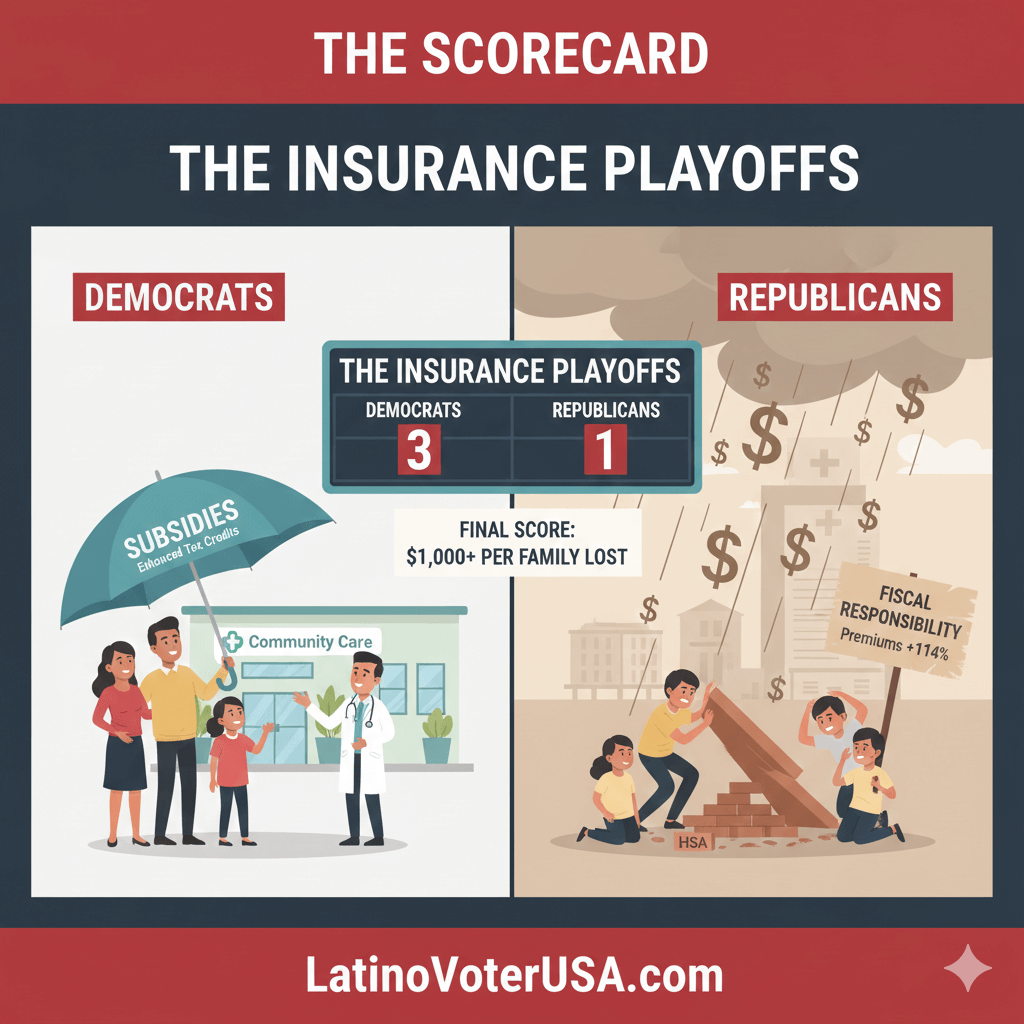
The Scorecard: The Health Insurance Playoffs!
You are not experiencing Deja vu! We are again facing a government shutdown, the main reason for it is the lack of a hea...

Opening the Opportunity Door for the Whole Family
What is the "Opportunity Door"? Imagine our Tía Sofia. She’s the heart of the neighborhood, the o...
Tamale Inflation is the Grinch of 2025
Tamale Inflation hit the kitchen before it ever hit a cable news chyron. Not in some abstract “consumer basket&rdq...