
ICE Deportations Inflation Impact: The Hidden Economic Storm
August 18, 2025 | Staff
ICE deportations are about to hit American families in their wallets harder than a surprise medical bill, and most people have no idea what's coming. While politicians debate the moral implications of mass deportations, economists are quietly sounding alarm bells about something that should terrify every family trying to make ends meet: the ICE deportations inflation impact that's about to make everything from groceries to housing cost significantly more.
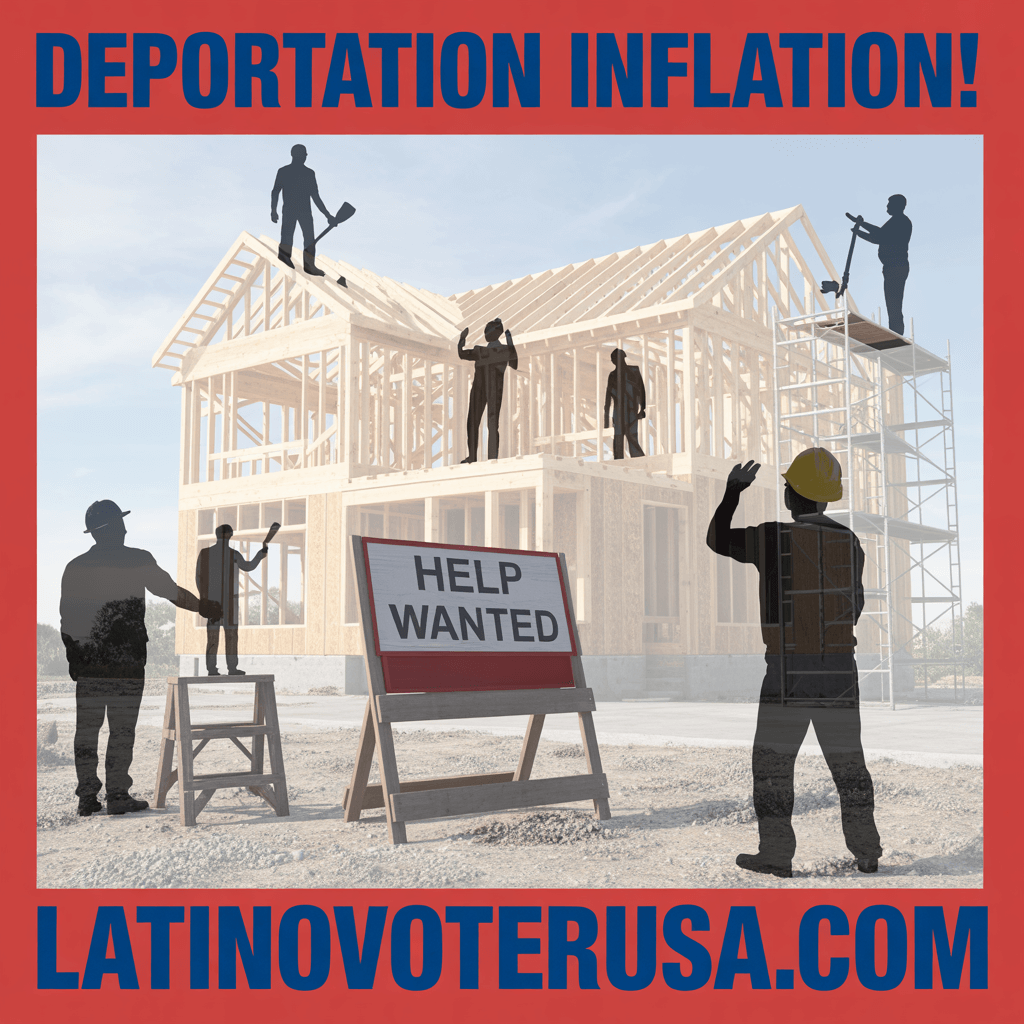
Picture this scenario: Carlos runs a construction company in Dallas that specializes in residential framing. Eight of his most experienced workers get swept up in deportation raids next month. Suddenly, he's scrambling to find replacements in a labor market where skilled construction workers are already harder to find than parking at the mall during Christmas. The workers he does find want wages that are 30% higher because they know every contractor in town is desperate. Carlos has two choices: shut down his projects or raise his prices on the homes he's building. Guess which one he's going to choose? Now multiply that story by thousands of construction companies across America, and you start to understand why Fortune Magazine is warning that inflation could jump from 2.5% to nearly 4% in the coming year.
The math here isn't complicated, but somehow it keeps getting lost in the political noise. When you remove approximately 750 immigrants daily from the American workforce, as current deportation rates suggest, you're not just removing people – you're removing the hands that pick your food, build your houses, and care for your elderly parents. These aren't abstract economic theories we're talking about; these are the people who keep essential parts of our economy running, often for wages that most Americans wouldn't accept.
Here's where it gets really frustrating: the politicians pushing for mass deportations seem to think the economy runs on good intentions and flowery speeches. They act like American workers are just sitting around waiting to jump into agriculture, construction, and healthcare jobs the moment immigrants are removed. But anyone who's actually run a business knows that's not how labor markets work. When you create sudden shortages in critical industries, you don't get American workers flooding in to fill those jobs – you get higher wages, higher costs, and ultimately higher prices for everyone.
The relationship between labor supply and inflation isn't some mysterious economic voodoo that only PhD economists can understand. When businesses can't find workers, they have to pay more for the workers they can find. When they pay more for workers, they charge more for their products and services. When they charge more, families pay more for everything from restaurant meals to home repairs to childcare. It's a chain reaction that starts with deportation vans and ends with families choosing between paying rent and buying groceries.
What makes this situation particularly maddening is that we're talking about a completely self-inflicted economic wound. The current analysis suggests that if deportations continue at their current pace, we could see a 0.4% reduction in GDP growth. That might sound small, but in an economy the size of America's, that represents hundreds of billions of dollars in lost economic activity and millions of jobs that won't be created. We're literally making ourselves poorer in the name of making ourselves safer, (except we're not actually becoming safer, we will talk about crime stats next week) – we're just becoming more expensive.
The ICE deportations inflation impact extends far beyond the obvious industries like agriculture and construction. When you remove teachers from classrooms, you create larger class sizes and the need to hire more expensive substitute teachers. When you remove healthcare workers from hospitals and nursing homes, you create staffing shortages that force facilities to pay premium wages for temporary workers. When you remove workers from any industry, you create ripple effects that touch every part of the economy.
Think about what this means for Latino voters who are already struggling with the cost of living. Not only are they dealing with the fear and uncertainty of potential deportation, but they're also going to get hit with higher prices for basic necessities. It's a cruel double burden: the threat of family separation combined with the economic pressure of inflation that makes it even harder to build financial security.
The broader implications of this policy should terrify anyone who cares about economic stability. We're not just talking about temporary disruptions that the market will eventually adjust to. We're talking about fundamental changes to labor markets that could take years to stabilize, during which time American families will be paying the price in higher costs for everything from housing to healthcare to education.
As we watch this economic storm building on the horizon, the question isn't whether the ICE deportations inflation impact will hit American families – it's how hard it will hit and how long it will take for us to recover from the damage we're inflicting on ourselves.
Read Next:

The Scorecard: The Health Insurance Playoffs!
You are not experiencing Deja vu! We are again facing a government shutdown, the main reason for it is the lack of a hea...

Opening the Opportunity Door for the Whole Family
What is the "Opportunity Door"? Imagine our Tía Sofia. She’s the heart of the neighborhood, the o...
Tamale Inflation is the Grinch of 2025
Tamale Inflation hit the kitchen before it ever hit a cable news chyron. Not in some abstract “consumer basket&rdq...